
Originally published by Matthew Cranston and Thomas Henry of The Australian.
28.08.2026
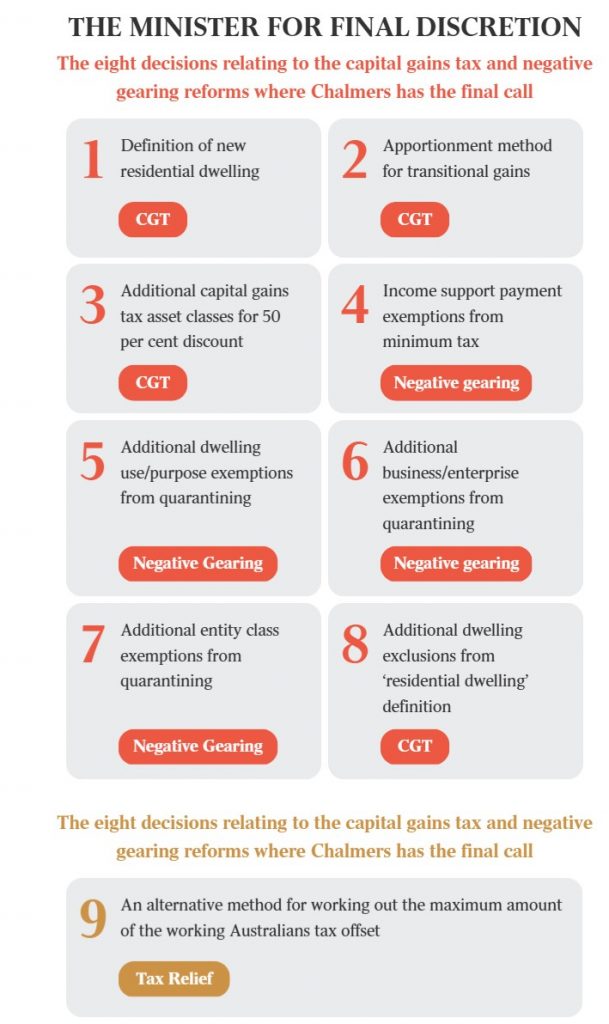
Treasurer Jim Chalmers was quick to allay concerns, saying his budget sweeteners would improve the outlook.
“So much of our economic agenda is about incentivising investment in Australian businesses and jobs … In our most recent budget, we announced nearly $4 billion in business tax relief measures to encourage more private investment, including making the small business instant asset write off permanent and expanding incentives for venture capital,” Dr Chalmers said.
Professor Banks characterised the Albanese government’s reform plans as “anti-productivity”.
He told the Australian Resources & Energy Employer Association on Thursday that the government’s major tax changes, subsidies in renewable energy and industrial relations policies, were all working against repairing productivity in Australia, which fell to -0.6 per cent in the March quarter this year, from 0 per cent in the previous quarter.
“The real story, as distinct from the government line, is that while there are indeed measures in the so-called ‘reform’ agenda that could help Australia’s productivity performance, there are also policy actions – and more importantly ‘inactions’ – that will impede it,” Professor Banks said.
“That is perhaps best illustrated by what the government has described as its ‘landmark tax reforms to incentivise investment and innovation’, comprising various subsidies and ‘concessions’. Any positive impacts of these selective measures are likely to be outweighed by the negative impacts across the economy of increasing the tax on capital gains,” he said.
“The anti-productivity initiatives keep on keeping on, to the point where it is hard to keep up.”
He noted a dozen policies such as the new law enforcing businesses to negotiate a union agreement if they wanted to win federal procurement contracts or financial grants.
These initiatives he said came despite the revelations about cost padding at the state level and “corruption totalling billions of dollars.”
“More recent ‘reforms’ are in reality mostly about further extending union presence and power, mirroring the agendas of the ACTU – as its departing secretary Sally McManus has boasted – and the CFMEU.”
Professor Banks said the government’s “enforced transitioning of our economy to renewable energy” would not make the system more productive and competitive, and that the government’s idea that it would was at “odds with economic logic and lived experience.”
“Anti-productivity impacts of the renewables rush are greatest in the electricity industry itself, with PC researchers estimating that labour productivity has declined by nearly one-third,” he noted.
In June the Productivity Commission declared that Australia’s falling productivity levels had been driven down by the replacement of coal-fired power plants with billions of dollars in renewable energy projects.
This week the Albanese government backed down on its threat to tap constitutional powers to enforce the $150bn data centre industry to be fuelled entirely by renewable power sources.
On Wednesday, Queensland and the Northern Territory secured a carve-out from the Albanese government’s attempt to impose the strict renewable energy mandates for the booming industry.
“Radical though it may sound given current ‘net zero’ orthodoxy, promoting adaptation to climate change would make more economic sense, especially given the ‘hotchpotch’ of costly, opaque interventions and unrealistic targets we have burdened ourselves with,” professor Banks said.
“Moreover, the fact that nuclear energy continues to be prohibited here while Australian uranium powers foreign countries is frankly absurd; ongoing regulatory constraints on gas defy common sense; and any further destruction of coal-fired generation without having reliable dispatchable alternatives is courting disaster,” he said.
Professor Banks said that there had been a tendency by some economists, as well as political leaders, to dismiss Australia’s diminished productivity performance as simply part of a secular global phenomenon.
“What this ignores, conveniently so from a governmental perspective, is that those other industrial countries that have also done poorly – though few more poorly than us lately – share with us a number of policy features that help explain it.”

Growth in private capital spending desperately needed to lift Australia’s dire productivity levels has fallen away by more than expected, leaving economic growth tracking at zero per cent in the June quarter, according to global investment giant Goldman Sachs.
The latest capital expenditure figures, which include a collapse in the import-heavy data centre investment, coincided with concerns raised by Australia’s first productivity commissioner professor Gary Banks that Labor’s economic policies, including the May budget tax changes and enforced renewable energy transition had, on balance, now become “anti-productivity,” and risked lowering standards of living.
In the first post-budget reading of how businesses were responding, private capital expenditure fell 3.6 per cent, held up only by a 1.5 per cent increase in mining, leaving non-mining investment down 5.3 per cent. A range of economists said the decline in capital spending would hurt GDP growth.
NAB economist Michael Hayes said, “Private business investment is still set to drag on GDP growth,” while Goldman Sachs chief economist Andrew Boak went further noting that, “Factoring in today’s downside surprise in Capex together with yesterday’s construction spending data, we lower our June-quarter GDP tracking estimate by 21 basis points to 0.0 per cent for the quarter.”